

I discovered something surprising after Andrew Wilkinson’s deep personality test.
It all started from a Whatsapp message.

In 2025 I flew to Canada to attend IP31. It's an event that puts a small group of incredible people in the same room for a few days.
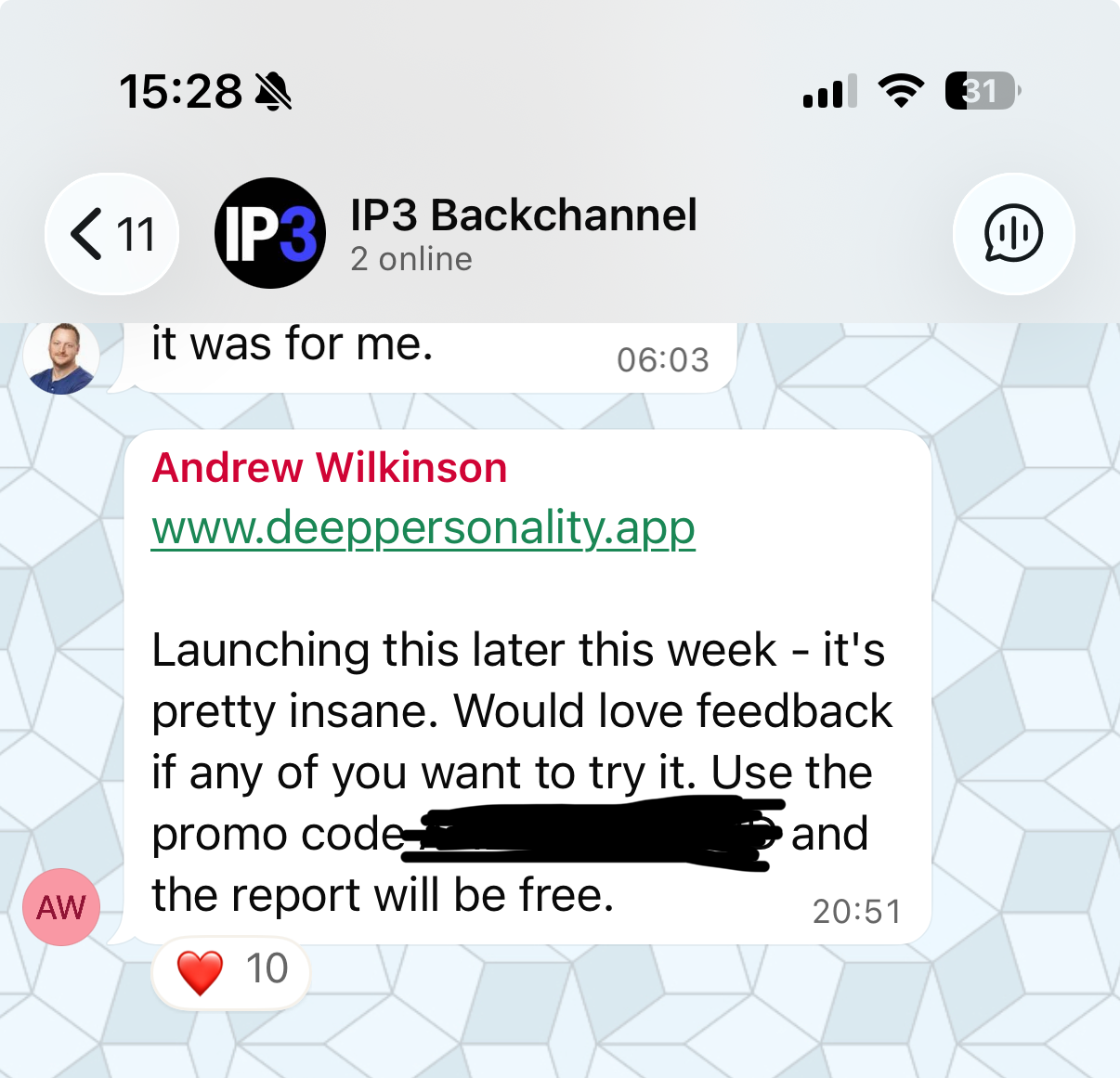
I'm still in the Whatsapp backchannel and a few weeks ago, Andrew Wilkinson posted a link in that group: a personality test he’d built, with a note that results were “pretty insane” and that he’d love feedback.
This is the kind of thing I’d normally skim past because it sounds like those Facebook quiz “discover what kind of vegetable you are”. But this was from Andrew. I know how serious he is when it comes to work and life design so I took it.
I expected to learn something mildly interesting about myself. I didn’t expect it to question ten years of my career in about forty minutes.
My work interest is…what?
The test maps a lot of different things, but I’ll focus on the professional profile. It's based on the RIASEC model2 across six types:
Realistic
Investigative
Artistic
Social
Enterprising
Conventional
Most people in the tech and startup world land somewhere in the Investigative-Enterprising zone. Analytical, systematic, execution-oriented.
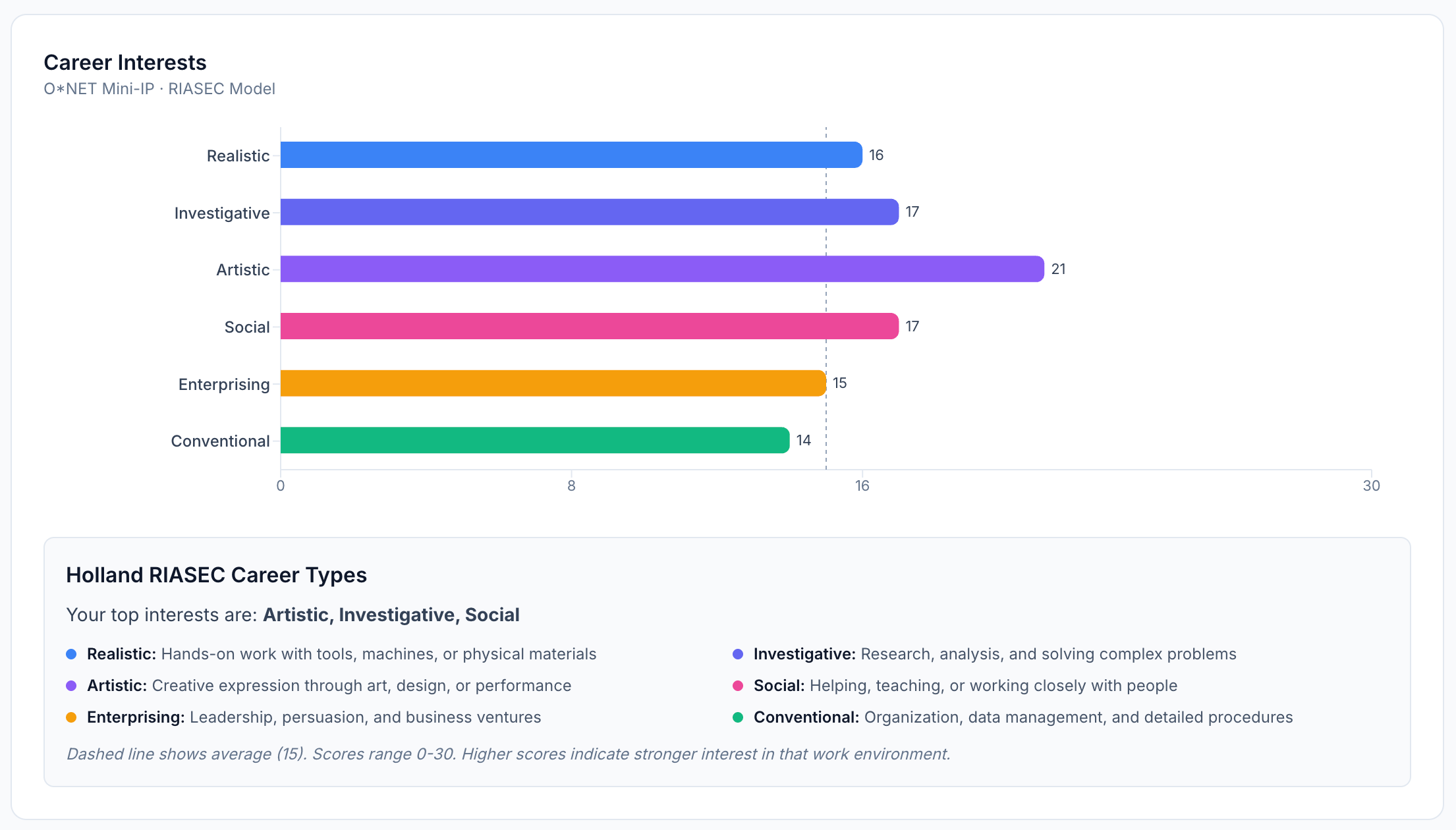
My dominant profile came back as Artistic-Investigative-Social, with a very predominant artistic interest.
Artistic first? I was very confused.
I've been runing a software agency for 10 years now. I’m not a painter. I don’t have a Moleskine full of sketches. What does “Artistic” have to do with anything I actually do?
I kept reading.
What artistic actually means?
I did my fair amount of Claude and Google searches and I discovered that the Artistic type, in professional psychology, doesn’t mean I am Pablo Picasso3.
It means something more specific:
“You need your work to carry your personal interpretation. You can’t just execute someone else’s system.
You need to leave a mark — a perspective, an angle, a way of seeing that is distinctly yours. Structure doesn’t protect you, it suffocates you. You think in unexpected connections.
You care, sometimes irrationally, about the quality and coherence of what you produce.”
When the Artistic type is operating outside its natural context — in roles that reward replication over creation, consistency over vision — it slowly burns out from a mismatch between what the environment needs and what the person is built to give.
What I’ve been doing at Belka
Looking back, my best contribution to Belka was never really in the delivery side of the business.
I was the one who shaped how we presented ourselves to the world: the website copy4, the narrative behind our positioning, the LinkedIn presence, the Medium articles, the way we talked about our work in pitches and proposals, often caring too much about every single word of a document.
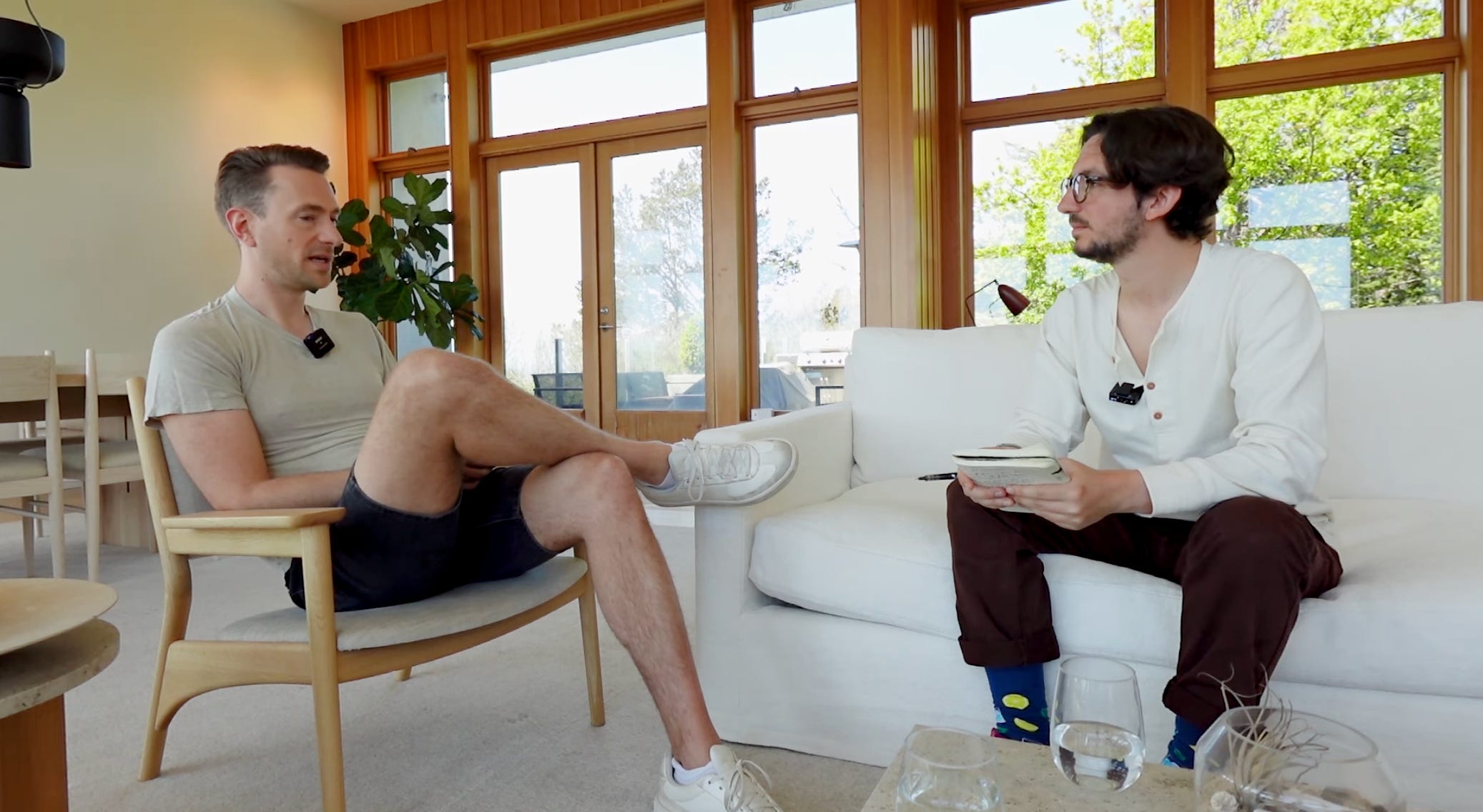
And then, a few years ago, I started COSA SPOSTA — a podcast interviewing Italian tech founders and digital product leaders. It was funded through Belka. It wasn’t, strictly speaking, my job. But it became the thing that consistently brought new clients through the door, built our reputation in ways that cold outreach never could, and — let's be honest — the most fun part of my work week.
The Artistic profile makes so much sense in this context. I succeeded at something the agency role had no box for, but was still valuable: bring customers through interesting content.
Leaving a mark
From the report's results:
You need to leave a mark — a perspective, an angle, a way of seeing that is distinctly yours.
I started thinking about another question: what is my “way of seeing that is distinctly yours”?
What do I do that someone else doesn’t? Looking back at my interviews I noticed a pattern.
I don’t like vague. When a guest says “it was really hard” or “we grew a lot,” something in me wakes up: how many hours per day is “hard”, exactly? How much growth, measured how?
The size of things, the specifics and the definition help me understand the scale, the risks, and more in general what was actually going on during that time.
I don't like ambiguity and I learned that a lot of the story lives in the specifics5.
I also noticed that the interviews I’m proudest of are personal without becoming therapy. There’s a line between going deep and going clinical, between intimacy and indulgence. I don’t always know how I navigate it — it's a narrow corridor — but I'm sure that in my best work the guest said something true that wouldn't belong in a press release.
The signature mark that I'm trying to leave is I want proof of how people think and why.
Measure the vague. Find the reality under the polished version. Peek under the professional narrative and find the human being making decisions inside of it.
Ok, so now what?
This is where most self-discovery articles turn into vague inspiration. Follow your passion. Honor your gifts. I am not a fortune cookie, so this is what I take out of this discoveries.
My best work is where the output carries my signature.
Things that are distinctly mine because of how I see the world and what questions I ask. Long-form profiles. Essays with a thesis. Conversations designed to make something real. This is the work I'm happy about6.
The Artistic type doesn’t mean I can’t do structured work.
It means I need creative ownership within whatever structure exists. I can work inside constraints — but it's hard to be an executor of someone else’s vision with no interpretive freedom.
The thing I’ve been treating as a side project is probably more aligned to me than I realised.
Cosa Sposta is not peripheral to my professional identity. It's the clearest expression of it. The question isn’t whether to take it seriously — it’s why I waited this long?7
Someone once said:
“You can’t connect the dots looking forward; you can only connect them looking backwards. So you have to trust that the dots will somehow connect in your future”
If you are curious about the story I wrote an article about that.
If you are curious about it: https://riasectest.com/
I know, surprising.
With Valgeir Valdimarsson.
“With which of your characters do you identify?” For God’s sake, with whom does an author identify? With the adverbs, obviously.” — Umberto Eco
And it's also the reason why I get annoyed quickly while interviewing someone who stays on the surface when I ask questions.
I think that the answer is that I wasn't fully aware of who I am and it took 32 years to understand it…?